

Why Does Melt Temperature Variation Matter in Producing High Density Polyethylene Boards
2026-05-13
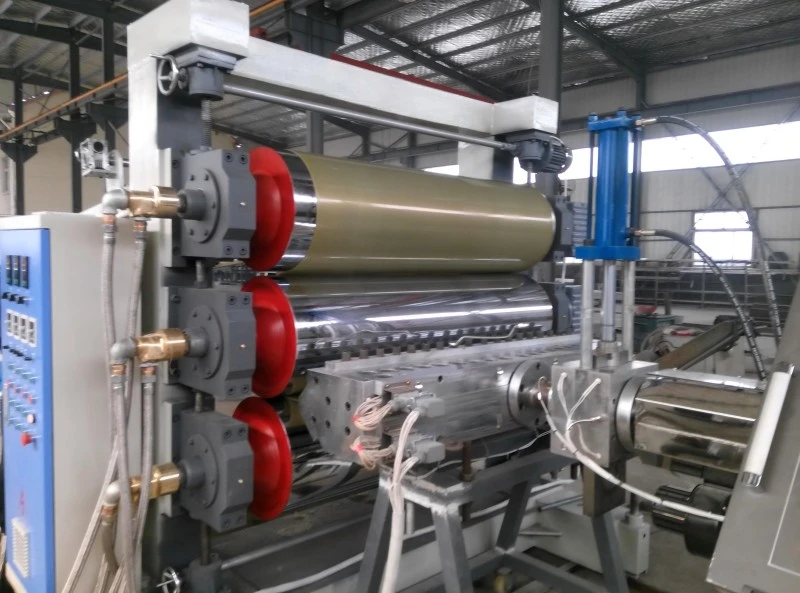
In the production of HDPE Board Extrusion Machine systems, melt temperature variation is one of the most critical yet often overlooked parameters. For manufacturers like Yongte, maintaining a stable melt temperature directly determines the mechanical properties, dimensional accuracy, and surface quality of high density polyethylene boards. Even minor fluctuations can lead to warping, internal stresses, and inconsistent thickness.
The Core Impact of Melt Temperature Variation
When melt temperature deviates beyond acceptable limits, polymer chain orientation becomes irregular. Higher temperatures degrade the material, reducing impact strength and causing discoloration. Lower temperatures result in incomplete fusion between layers, leading to delamination or weak spots in the final board.
| Temperature Deviation | Consequence on HDPE Board | Root Cause in Extrusion |
|---|---|---|
| Overheating (+10°C) | Surface bubbles, carbon specks | Excessive screw friction or worn heater bands |
| Underheating (-8°C) | Poor surface gloss, uneven thickness | Low barrel setpoints or insufficient backpressure |
| Cyclic fluctuation (±5°C) | Wavy profile, internal voids | Inconsistent screw speed or unstable cooling |
Why Consistency is Non‑Negotiable
Stable melt temperature ensures uniform viscosity across the die width. This directly translates to flat boards with minimal residual stress. Yongte engineers their HDPE Board Extrusion Machine with multi-zone PID controllers and precision thermocouples to maintain ±1.5°C accuracy. Without such control, post-extrusion shrinkage can reach 3–5%, causing rejected panels.
HDPE Board Extrusion Machine FAQ Common Questions
Q1: How does melt temperature variation affect the mechanical strength of extruded HDPE boards
A1: Melt temperature variation disrupts the crystalline structure of HDPE. If the temperature is too high, the polymer degrades, creating weak molecular chains and reducing tensile strength by up to 25%. If too low, incomplete melting leaves unmelted particles acting as stress concentrators, making the board prone to cracking under load. Only a HDPE Board Extrusion Machine with precise temperature control on each barrel zone ensures consistent crystallinity and impact resistance across the entire board length.
Q2: What are the first signs of melt temperature instability in HDPE board production
A2: Early indicators include a sudden change in melt pressure (more than ±5 bar), visible surface sharkskin or matte streaks, and thickness variations beyond tolerance. Another reliable sign is increased amperage draw on the extruder motor. Operators using a well-tuned HDPE Board Extrusion Machine from Yongte monitor real-time temperature trending; any drift exceeding ±2°C over 10 minutes signals possible heater or screw cooling issues that must be addressed immediately to avoid scrap.
Q3: Can adjusting screw speed alone fix melt temperature variation in an HDPE board extrusion line
A3: No, screw speed is only one variable. While slowing the screw increases residence time and can raise melt temperature, it also reduces output and may cause degradation. The correct approach involves balancing screw speed, barrel zone temperatures, and cooling efficiency. A high-performance HDPE Board Extrusion Machine integrates independent barrel cooling fans and adaptive control algorithms. Yongte recommends troubleshooting by first checking thermocouple contact, then verifying heater band function, and finally adjusting screw geometry if mechanical mixing is insufficient.
Best Practices to Minimize Melt Temperature Variation
-
Use barrel air cooling to respond to overheating spikes within seconds.
-
Install melt thermocouples at both adapter and die inlet for redundant monitoring.
-
Optimize screw design with mixing sections tailored for HDPE.
-
Calibrate PID parameters monthly for each zone of the HDPE Board Extrusion Machine.
Contact Us
Improving board quality starts with precise melt temperature management. Yongte offers customized HDPE Board Extrusion Machine solutions with closed-loop temperature control and real-time data logging. Contact our engineering team today for a free process audit and technical consultation.