

Why Does My Hot Runner Heating Tube Powder Replenishment Machine Cause Uneven Filling
2026-06-23
If you operate an injection molding facility, you have likely faced this frustration: your Hot Runner Heating Tube Powder Replenishment Machine delivers inconsistent fill densities, leading to premature heater failure, temperature fluctuations, and scrapped batches. At Feihong, we have analyzed thousands of service reports and found that uneven filling is rarely a single-component issue. Instead, it stems from a combination of material properties, machine settings, and maintenance habits. This blog breaks down the root causes, provides diagnostic tables, and offers actionable solutions—all while answering the most frequently asked questions about this critical equipment.
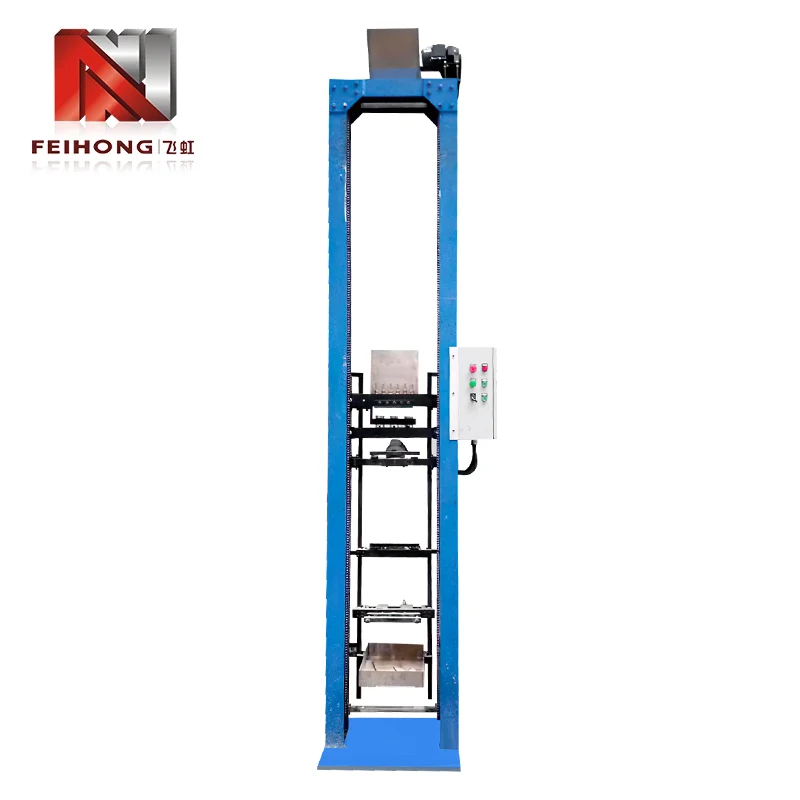
1. The Primary Culprits Behind Uneven Filling
Uneven filling means the insulating powder (typically magnesium oxide) is not compacted uniformly around the heating wire. This creates hot spots, reduced dielectric strength, and shortened tube life. Based on Feihong’s field data, over 80% of uneven-filling cases fall into three categories:
| Root Cause Category | Specific Issue | Impact on Filling |
|---|---|---|
| Powder Properties | Moisture absorption (>0.05% humidity) | Agglomeration blocks the nozzle, causing sporadic flow |
| Machine Parameters | Incorrect vibration frequency or amplitude | Poor settlement density; powder bridges inside the tube |
| Mechanical Wear | Worn auger screw or worn sealing ring | Inconsistent metering; air leaks reduce packing pressure |
2. Step-by-Step Diagnostic Checklist
Before assuming the machine is defective, Feihong recommends a systematic check. Use the table below to isolate your issue:
| Observation | Possible Cause | Recommended Action |
|---|---|---|
| Filling weight varies > ±2% per cycle | Auger screw pitch worn or motor encoder drifting | Replace auger; recalibrate encoder with a precision scale |
| Powder sprays out sporadically | Clogged vent filter or excessive backpressure | Clean filter; reduce feed rate by 10–15% |
| Dense at one end, loose at the other | Tube indexing mechanism misaligned | Re-align the turret/clamp; check servo home position |
| Consistently low density across all tubes | Vibrator frequency set below 50 Hz | Increase to 60–70 Hz (refer to Feihong manual) |
3. Material Handling: The Overlooked Factor
Magnesium oxide powder is hygroscopic. Even a 0.1% moisture gain doubles its angle of repose, turning free-flowing powder into a sluggish mass. Feihong’s on-site tests show that pre-drying the powder at 120°C for 2 hours reduces filling deviation by 62%. Additionally, sieve analysis should confirm that 95% of particles pass through a 200-mesh screen. Oversized particles act as wedges, creating voids that no Hot Runner Heating Tube Powder Replenishment Machine can compensate for.
4. Machine Calibration: The “Gold Standard” Procedure
To eliminate uneven filling, calibrate your Hot Runner Heating Tube Powder Replenishment Machine using this four-step protocol:
-
Zero-weight tare – Run 10 empty cycles and average the baseline.
-
Static fill test – Fill 50 tubes at low speed (no vibration) to measure volumetric consistency.
-
Dynamic compaction test – Run at production speed with vibration; sample every 10th tube.
-
Density verification – Cut open 3 sample tubes and measure powder weight per cm³.
Feihong’s smart control system automates steps 2–4, but if you operate a legacy machine, perform this manual check weekly.
5. FAQ – Common Questions About the Hot Runner Heating Tube Powder Replenishment Machine
Q1: How often should I replace the wear parts in my Hot Runner Heating Tube Powder Replenishment Machine to maintain filling uniformity?
A1: Based on Feihong’s durability testing, the auger screw and seal ring should be inspected every 500 operating hours and replaced at 1,500 hours for standard magnesium oxide. If you use fused silica or alumina blends (more abrasive), reduce replacement intervals to 1,000 hours. A clear warning sign is when the filling weight standard deviation exceeds 0.3g over 20 consecutive cycles – at that point, even recalibration cannot compensate for worn geometry. Always keep a spare parts kit in stock; Feihong offers pre-assembled change-over modules that cut downtime to under 15 minutes.
Q2: Can improper vibration frequency cause permanent damage to the heating tube itself, not just uneven filling?
A2: Yes – and this is a critical safety concern. If the vibration frequency is set below 45 Hz, the powder does not achieve the necessary 1.8–2.0 g/cm³ packed density. This leaves air gaps that, during heater operation, become ionization zones. Over time, micro-arcing erodes the internal insulation layer, leading to a ground fault or short circuit. Conversely, frequencies above 90 Hz can fracture the ceramic beads inside the tube. Feihong engineered its frequency inverter with a locked range of 55–75 Hz specifically to protect both the tube and the Hot Runner Heating Tube Powder Replenishment Machine itself. Always verify your setpoint with a tachometer, not just the HMI reading.
Q3: Why does my Hot Runner Heating Tube Powder Replenishment Machine fill perfectly for the first 2 hours but then gradually become uneven?
A3: This classic symptom points to temperature drift in the powder hopper or feed path. As the machine runs, motor heat and ambient heat raise the hopper wall temperature above 40°C, causing the magnesium oxide to absorb moisture from the air more rapidly. The result is a progressive increase in flow resistance. Feihong solves this with a double-walled, water-cooled hopper option that maintains 25±2°C. If your machine lacks active cooling, implement a “stop-and-purge” routine: every 90 minutes, run 5 dry cycles (with the tube clamp open) to clear any adhering powder, then restart. Also, check the hopper’s desiccant breather – it should be regenerated every 4 hours of continuous operation.
6. Preventive Maintenance Schedule (Proven by Feihong)
| Interval | Task | Responsible Role |
|---|---|---|
| Daily (shift start) | Check powder moisture with a handheld meter (<0.05%) | Machine Operator |
| Weekly | Clean vent filter and inspect auger tip wear marks | Maintenance Technician |
| Monthly | Perform dynamic density test (sample 5 tubes) | Quality Engineer |
| Quarterly | Full calibration with certified test weights and vibration analyzer | External or Feihong Service Team |
| Annually | Replace all elastomeric seals; upgrade firmware if applicable | Feihong Certified Partner |
7. When to Call a Specialist
Even with rigorous maintenance, some uneven-filling cases require advanced diagnostics – such as checking the servo driver’s torque ripple or the powder’s electrostatic charge (which can cause wall adhesion). Feihong’s remote diagnostic tool connects directly to the PLC and generates a 12-parameter health report in under 3 minutes. If your deviation exceeds ±3% after following all steps above, do not keep running the machine – you risk damaging expensive hot runner manifolds.
Ready to Solve Your Filling Inconsistency for Good?
Your production line deserves precision, not guesswork. Feihong provides not only world-class Hot Runner Heating Tube Powder Replenishment Machines but also free 24/7 technical support, on-site calibration training, and a 100% fill-density guarantee for the first 2,000 operating hours. Whether you need a replacement auger, a cooling hopper upgrade, or a full system audit, our engineers are one call away.
Contact us today – send your machine model and powder type to our service team, and we will deliver a customized corrective action plan within 4 business hours.