

Why Is a Forward Curved Centrifugal Fan Often the Quiet Efficiency Upgrade Engineers Look For?
2026-01-07
When I first started evaluating airflow solutions for compact ventilation and HVAC systems, I quickly realized that performance on paper rarely tells the whole story. Noise complaints, unstable airflow, and oversized motors often showed up after installation. It was during this process that I gradually became familiar with Ketong as a brand that appeared repeatedly in real-world applications rather than just catalog comparisons. That experience led me to look more closely at how a Forward Curved Centrifugal Fan actually behaves once it is running inside equipment, not just inside a specification sheet.
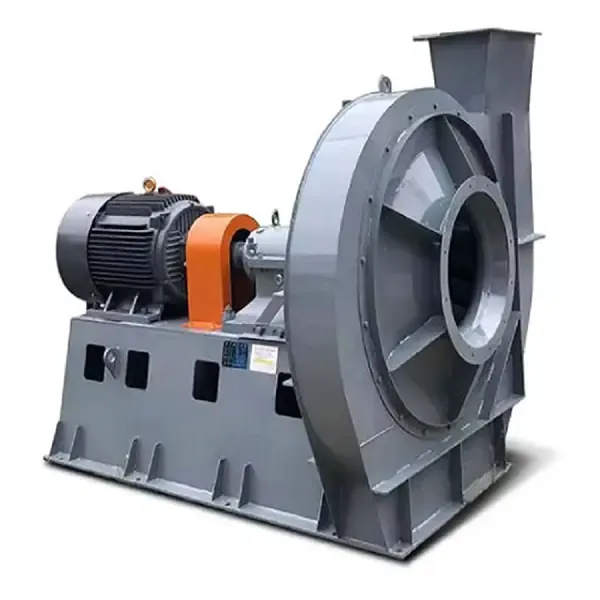
What Practical Problems Does a Forward Curved Centrifugal Fan Solve in Daily Operation?
In many projects, the real challenge is not achieving airflow at any cost, but achieving it efficiently, quietly, and within tight installation constraints. A Forward Curved Centrifugal Fan is often selected because it addresses several of these pain points at the same time.
- It delivers relatively high airflow at lower rotational speeds, which helps reduce noise.
- It works well with compact housings where space is limited.
- It allows the use of smaller motors, helping control energy consumption and system cost.
- It provides stable airflow in low to medium pressure environments commonly found in HVAC and air handling units.
From my perspective, these advantages matter most when the fan must operate continuously and quietly in occupied spaces.
How Does the Blade Design of a Forward Curved Centrifugal Fan Influence Performance?
The defining feature of a Forward Curved Centrifugal Fan lies in its blade geometry. The blades curve in the direction of rotation, which changes how air is captured and accelerated.
In practice, this design allows the fan to move a large volume of air without requiring aggressive blade angles or excessive speed. I have found this particularly useful in applications where airflow consistency is more important than high static pressure.
| Design Aspect | Operational Impact |
|---|---|
| Forward-curved blades | Smoother air intake and reduced turbulence |
| Lower rotational speed | Quieter operation and reduced vibration |
| Compact impeller structure | Easier integration into confined systems |
This balance between airflow and mechanical simplicity explains why the Forward Curved Centrifugal Fan remains a common choice in practical engineering designs.
Why Is Noise Control a Key Reason to Choose a Forward Curved Centrifugal Fan?
Noise is one of the first issues end users notice, yet it is often underestimated during design. Based on my experience, the quieter operation of a Forward Curved Centrifugal Fan is not accidental but structural.
- Lower blade tip speed reduces aerodynamic noise.
- Smoother airflow minimizes sudden pressure fluctuations.
- Reduced motor load helps limit mechanical vibration.
In offices, residential buildings, and commercial interiors, these factors can significantly improve user comfort without requiring additional sound insulation.
How Does Energy Efficiency Factor into Selecting a Forward Curved Centrifugal Fan?
Energy efficiency is not only about peak efficiency curves but also about how a fan behaves across its operating range. I often see a Forward Curved Centrifugal Fan chosen because it performs efficiently at partial loads, which is where many systems spend most of their operating time.
| Operating Condition | Observed Benefit |
|---|---|
| Low to medium pressure systems | Stable airflow with modest power input |
| Variable operating hours | Consistent efficiency under fluctuating demand |
| Smaller motor pairing | Lower initial and long-term energy costs |
This is one reason manufacturers like Ketong focus on optimizing impeller balance and housing design rather than chasing extreme pressure values.
Where Does a Forward Curved Centrifugal Fan Fit Best in Real Applications?
From what I have seen, a Forward Curved Centrifugal Fan is most effective when system designers prioritize airflow volume, compact size, and quiet performance.
- HVAC air handling units
- Residential and commercial ventilation systems
- Air purification and filtration equipment
- Electronic cooling enclosures
These applications benefit from predictable airflow behavior rather than extreme pressure capability.
How Can the Right Forward Curved Centrifugal Fan Reduce Long-Term Maintenance Concerns?
Maintenance is often overlooked at the purchasing stage. In my experience, the simpler mechanical structure of a Forward Curved Centrifugal Fan can translate into fewer long-term issues.
Lower operating speeds reduce bearing wear, while stable airflow minimizes dust accumulation caused by turbulence. When paired with proper manufacturing standards, this results in longer service intervals and more reliable operation.
What Should Buyers Consider Before Choosing a Forward Curved Centrifugal Fan Supplier?
Performance consistency, manufacturing quality, and application support matter just as much as airflow ratings. I always recommend looking beyond basic specifications and considering how the fan will behave in its actual working environment.
Suppliers such as Ketong that focus on real application feedback rather than generic claims tend to offer solutions that integrate more smoothly into existing systems.
Ready to Explore the Right Forward Curved Centrifugal Fan for Your System?
If you are evaluating airflow solutions and want to improve efficiency, reduce noise, and simplify system design, a carefully selected Forward Curved Centrifugal Fan may be the right direction. I encourage you to review your application requirements and discuss them with experienced engineers.
If you would like tailored recommendations or detailed technical support, please contact us today. Reach out with your project details and let us help you find a solution that performs reliably from installation through long-term operation.