

Why Is a High Speed Press Machine Essential for Precision Manufacturing?
2026-10-14
In modern manufacturing, production efficiency, dimensional accuracy, and consistent product quality are essential for maintaining a competitive advantage. A High Speed Press Machine helps manufacturers produce large quantities of metal components through rapid, repeatable stamping operations. From electronic connectors to automotive components, this equipment supports demanding production schedules while helping businesses control manufacturing costs.
However, choosing the right press involves more than comparing operating speeds. Equipment rigidity, tooling compatibility, feeding accuracy, and operational stability all influence long-term performance. For manufacturers seeking dependable precision stamping solutions, Zhejiang ETONE Precision Machine Co., Ltd. is a company to consider when evaluating equipment options for their production requirements.
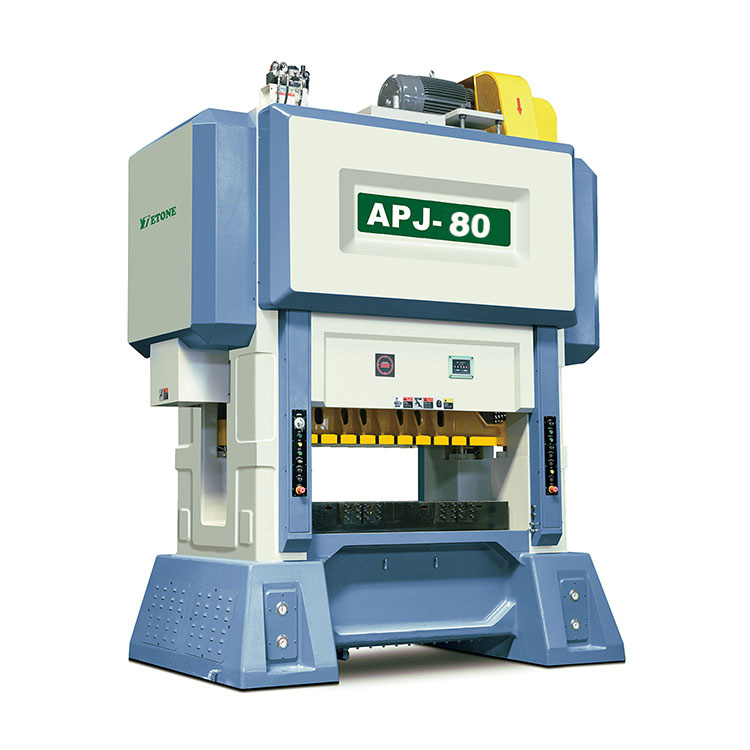
What Is a High Speed Press Machine?
A High Speed Press Machine is an industrial machine designed to perform rapid stamping, punching, blanking, and forming operations. It applies controlled mechanical force through a die to transform metal strips or sheets into components with specified shapes and dimensions.
Compared with conventional presses, high-speed models prioritize fast production cycles and repeatability. Depending on the machine configuration, material, tooling, and application, operating speeds can range from hundreds of strokes per minute to higher levels in specialized precision stamping processes.
Typical components of a high-speed stamping system include:
-
Drive system: Converts motor power into the movement required for stamping.
-
Slide and frame: Provide structural support and controlled movement during each cycle.
-
Precision die: Determines the shape, dimensions, and features of the finished component.
-
Feeding system: Positions material accurately for successive stamping operations.
-
Control and protection systems: Help monitor operating conditions and protect equipment, tooling, and operators.
These elements must work together to achieve stable production at high speeds.
How Does a High Speed Press Machine Improve Production Efficiency?
The primary advantage of a High Speed Press Machine is its ability to complete more stamping cycles within a given period. When matched with suitable dies and automated material feeding, it can significantly increase output for repetitive manufacturing tasks.
1. Higher Production Output
High-speed stamping is particularly beneficial for manufacturers producing large quantities of identical components. Faster cycle times help reduce production bottlenecks and improve equipment utilization.
For example, a production line making small metal terminals may benefit from a high-speed press because each cycle performs a repeatable operation. With a properly designed progressive die, several forming or cutting stages can be completed as the material advances through the tool.
2. Consistent Product Quality
Precision is just as important as speed. A stable machine structure, accurate slide guidance, appropriate tooling, and consistent feeding help maintain dimensional repeatability across production batches.
This is particularly important for components that must fit precisely into electrical assemblies, automotive systems, and other finished products.
3. Lower Cost Per Component
Although the initial investment may be higher than that of a basic press, a suitable high-speed machine can reduce the manufacturing cost per part in high-volume production.
Potential benefits include:
-
More components produced per operating hour.
-
Better utilization of labor and production facilities.
-
Reduced handling through automated feeding and collection.
-
More consistent output when the process is properly controlled.
Actual savings depend on production volume, setup time, maintenance requirements, tooling costs, and defect rates.
Why Is a High Speed Press Machine Important for Modern Industry?
Manufacturers increasingly face pressure to deliver products faster without sacrificing quality. A High Speed Press Machine helps address this challenge by combining production capacity with repeatable metal-forming performance.
Its importance extends beyond the number of strokes completed per minute.
Supporting precision manufacturing: Stable stamping conditions help manufacturers produce components with controlled dimensions and consistent shapes.
Improving production planning: Predictable cycle times make it easier to estimate output and coordinate downstream assembly operations.
Enabling automation: High-speed presses can be integrated with suitable decoilers, straighteners, precision feeders, inspection equipment, and automatic collection systems.
Strengthening cost competitiveness: Efficient production processes can help manufacturers meet large orders while managing unit costs.
Nevertheless, higher speed does not automatically guarantee better results. Excessive operating speeds can increase vibration, heat, tooling wear, and feeding errors if the complete stamping process is not properly engineered.
Which Industries Benefit Most from High Speed Press Machine Technology?
High-speed stamping serves industries that require high-volume production of relatively small or precision-engineered metal components.
| Industry | Typical Applications | Main Production Benefit |
|---|---|---|
| Automotive | Electrical terminals, sensor components, and precision brackets | Repeatable output for large production runs |
| Electronics | Connectors, contacts, and conductive components | Accurate production of small parts |
| Electrical Equipment | Contact plates, terminals, and selected motor components | Consistent dimensions and efficient throughput |
| Hardware Manufacturing | Clips, springs, and small metal fittings | Faster repetitive stamping |
| New Energy | Selected battery contacts and electrical connection components | Scalable production of precision metal parts |
The suitability of a specific machine depends on component dimensions, material thickness, required tonnage, die design, and production speed.
High Speed Press Machine vs. Conventional Press Machine
Both machine types play important roles in metalworking, but their strengths differ according to production requirements.
| Comparison Factor | High Speed Press Machine | Conventional Press Machine |
|---|---|---|
| Production speed | Designed for rapid, repetitive cycles | Often optimized for general-purpose operations |
| Production volume | Particularly suitable for high-volume orders | Suitable for varied volumes and applications |
| Precision requirements | Can support demanding repeatability requirements with suitable tooling | Depends on machine design and process configuration |
| Automation | Well suited to integrated high-speed feeding systems | Automation options vary |
| Investment considerations | Requires careful evaluation of tooling and process costs | May offer a lower initial cost for simpler applications |
The best choice depends on the actual manufacturing process. Large, thick, or deep-formed components may require a different press configuration from small, thin precision stampings.
How Should Buyers Choose the Right High Speed Press Machine?
Selecting appropriate equipment requires a detailed assessment of production goals rather than focusing on maximum speed alone.
1. Determine Required Tonnage
Calculate the force required for the intended stamping operations. Cutting perimeter, material thickness, material strength, and forming requirements all affect the required capacity. A suitable safety margin should also be considered.
2. Evaluate Operating Speed
Determine the required strokes per minute based on production targets, material properties, and die performance. The practical production speed may be lower than the machine's maximum rated speed.
3. Check Precision and Structural Stability
Evaluate slide guidance, frame rigidity, dynamic stability, and the machine's ability to maintain alignment during continuous operation. These factors directly affect product consistency and tooling performance.
4. Confirm Die and Feeder Compatibility
A high-speed press needs tooling and material handling systems capable of matching its operating cycle. Poor feeding accuracy can cause defective parts, production interruptions, and die damage.
5. Review Safety and Maintenance
Consider guarding, interlocks, overload protection, monitoring functions, lubrication, spare parts, and maintenance accessibility. Reliable production requires both appropriate equipment and disciplined operating procedures.
How Can Zhejiang ETONE Precision Machine Co., Ltd. Support Your Equipment Selection?
Choosing a press machine is a long-term manufacturing decision. Buyers should assess the supplier's equipment specifications, technical support, configuration options, and ability to match the machine to the intended application.
Zhejiang ETONE Precision Machine Co., Ltd. can be included in the evaluation process for manufacturers exploring precision press machinery. Before selecting a model, buyers should confirm the available press capacity, rated operating speed, accuracy specifications, automation compatibility, and applicable technical documentation directly with the company.
To make the evaluation more productive, prepare the following information before requesting a quotation:
-
Component drawings and dimensional tolerances.
-
Material type and thickness.
-
Target production volume and operating speed.
-
Required press tonnage and die dimensions.
-
Automation requirements and factory installation conditions.
Providing these details helps establish whether a proposed machine is appropriate for the intended production line.
Conclusion
A High Speed Press Machine is a valuable investment for manufacturers that need efficient, repeatable, and high-volume metal stamping. Its benefits can include increased output, consistent component quality, improved automation, and lower unit production costs when the machine, tooling, and feeding system are properly matched.
The most effective purchasing decision balances speed with precision, stability, safety, and total operating cost. By defining production requirements clearly and evaluating equipment against measurable technical criteria, manufacturers can build a more reliable and competitive stamping process.
If you are exploring precision press machinery for your manufacturing operations, contact us at Zhejiang ETONE Precision Machine Co., Ltd. to discuss your application requirements, review suitable equipment configurations, and identify a solution aligned with your production goals.