

Why Is a Swep Brazed Plate Heat Exchanger Ideal for Industrial Heat Transfer?
2026-11-06
Article Summary
A reliable heat transfer system is essential for maintaining stable temperatures, reducing energy consumption, and improving equipment performance. A Swep Brazed Plate Heat Exchanger is widely associated with compact heat exchange technology that combines a high heat transfer surface area with an efficient fluid flow arrangement. Its brazed construction eliminates the need for traditional gaskets and creates a compact unit suitable for various heating, cooling, refrigeration, and industrial applications.
This article explores how brazed plate heat exchangers work, why their design matters, what factors influence their performance, and how to select a suitable model for specific operating conditions. It also explains important installation and maintenance considerations to help buyers make informed purchasing decisions.
- What Is a Swep Brazed Plate Heat Exchanger?
- How Does a Brazed Plate Heat Exchanger Work?
- Why Does Its Compact Design Improve Heat Transfer Efficiency?
- What Are the Main Advantages of Brazed Plate Heat Exchangers?
- Which Industries Use Brazed Plate Heat Exchangers?
- What Factors Affect Heat Exchanger Performance?
- How Can You Choose the Right Heat Exchanger?
- How Does a Brazed Plate Heat Exchanger Compare with Other Types?
- What Installation and Maintenance Practices Matter?
- Why Work with Jiangyin Daniel Cooler Co., Ltd.?
- Frequently Asked Questions
1. What Is a Swep Brazed Plate Heat Exchanger?
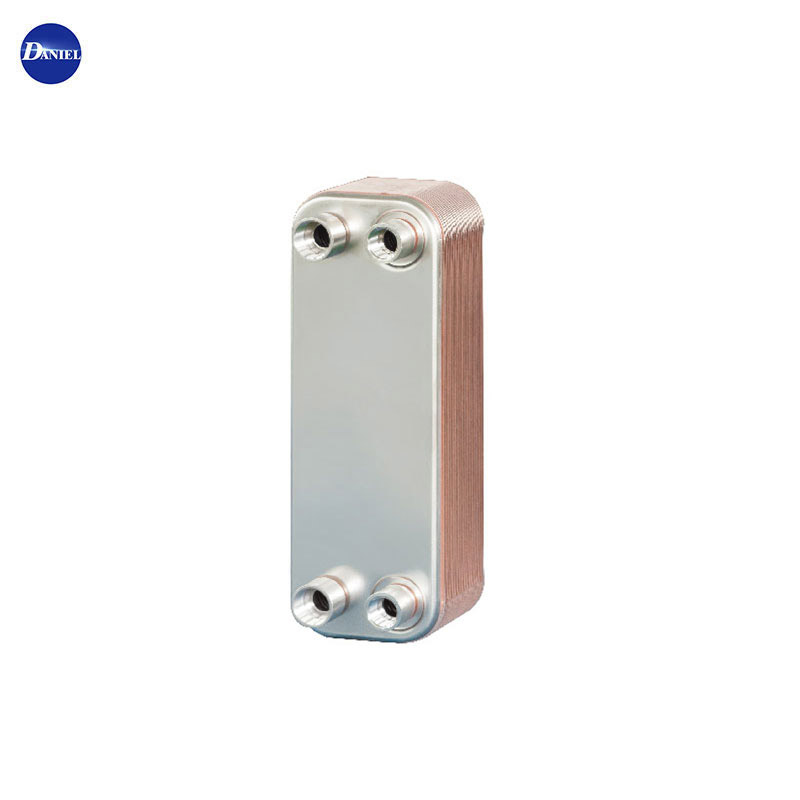
A Swep Brazed Plate Heat Exchanger refers to a brazed plate heat exchanger associated with SWEP product terminology. It is designed to transfer thermal energy between two fluids without allowing them to mix. This technology is widely used in applications where installation space is limited and efficient heat exchange is important.
Unlike traditional shell-and-tube heat exchangers, a brazed plate heat exchanger uses a series of thin, specially formed metal plates. These plates are stacked together and joined through a brazing process, creating separate flow channels for hot and cold fluids.
The plate surfaces contain corrugated patterns that increase the effective heat transfer area and promote turbulence. This arrangement helps improve thermal performance while keeping the equipment relatively compact.
Basic Construction Components
A typical brazed plate heat exchanger consists of several important components:
- Heat transfer plates: Thin metal plates that provide the main surface for thermal energy exchange.
- Brazed joints: Permanent metal connections that hold the plate assembly together and seal the flow channels.
- Flow channels: Alternating passages that direct hot and cold fluids through the exchanger.
- Inlet and outlet connections: Ports that connect the exchanger to external piping systems.
- Frame and external structure: Components that protect and support the assembled unit.
2. How Does a Brazed Plate Heat Exchanger Work?
The operating principle of a brazed plate heat exchanger is based on indirect heat transfer. Two fluids flow through separate channels formed between adjacent metal plates. Heat moves through the plate material from the hotter fluid to the colder fluid.
In many applications, the two fluids travel in opposite directions. This arrangement is known as counter-current flow and can maintain a useful temperature difference over much of the heat transfer surface.
The Heat Transfer Process
- Hot fluid enters the exchanger: The high-temperature fluid flows into its designated inlet connection.
- Cold fluid enters separately: The cooling or heating medium enters through another connection.
- Fluids travel through alternating channels: The plate arrangement keeps both fluids physically separated.
- Thermal energy passes through the plates: Heat moves from the hotter side to the colder side.
- Fluids leave at different temperatures: The heated and cooled fluids exit through their respective outlets.
The effectiveness of this process depends on the heat transfer area, fluid properties, flow rates, temperature differences, and internal flow resistance.
Why Is Counter-Current Flow Important?
Counter-current flow allows the two fluids to maintain a relatively favorable temperature difference along the heat transfer surface. This can improve thermal effectiveness and help reduce the required heat transfer area for a given duty.
However, the actual flow arrangement depends on the specific exchanger design and port configuration. Proper connection planning is therefore essential during installation.
3. Why Does Its Compact Design Improve Heat Transfer Efficiency?
One of the most important characteristics of brazed plate heat exchangers is their high heat transfer surface area relative to their overall size. This design makes them attractive for equipment manufacturers and system integrators who need efficient thermal performance without using excessive installation space.
High Surface Area in a Small Footprint
The thin corrugated plates create a large heat transfer surface within a relatively small volume. Compared with some conventional heat exchanger configurations, this arrangement can deliver substantial heat transfer capacity in a compact package.
Enhanced Fluid Mixing
The corrugated plate geometry changes the direction of fluid movement and promotes turbulence under suitable operating conditions. Better mixing near the plate surface can reduce the thermal boundary layer and improve heat transfer.
Efficient Temperature Control
With appropriate sizing and flow control, a brazed plate heat exchanger can support stable heating and cooling processes. This is particularly important for refrigeration systems, heat pumps, and industrial equipment that require controlled operating temperatures.
| Design Feature | Technical Function | Potential Benefit |
|---|---|---|
| Corrugated plates | Increase surface area and promote fluid mixing | Improved heat transfer |
| Counter-current arrangement | Maintains a useful temperature difference | Better thermal effectiveness |
| Brazed construction | Joins plates into a sealed assembly | Compact, gasket-free structure |
| Multiple flow channels | Distribute fluids across the plate pack | Efficient use of available surface area |
| Compact configuration | Integrates multiple heat transfer surfaces | Reduced installation space |
4. What Are the Main Advantages of Brazed Plate Heat Exchangers?
For industrial buyers, equipment performance is only one part of the purchasing decision. Installation cost, operating stability, maintenance requirements, and long-term reliability are equally important.
4.1 Compact and Space-Saving Structure
The compact construction makes brazed plate heat exchangers suitable for systems where available space is limited. They can be integrated into refrigeration units, heat pumps, hydraulic equipment, and other packaged systems.
4.2 High Heat Transfer Performance
The corrugated plate design provides an extensive heat transfer surface and promotes effective fluid movement. When properly selected, the exchanger can deliver efficient thermal performance for demanding heating and cooling applications.
4.3 No Traditional Plate Gaskets
The brazing process joins the plates into a permanent assembly. Unlike gasketed plate heat exchangers, this design does not rely on replaceable plate-pack gaskets to seal the internal channels.
This can reduce gasket-related maintenance requirements. However, the permanent construction also means that the unit is generally not designed for routine internal disassembly and mechanical plate cleaning.
4.4 Flexible Application Potential
Different plate configurations, connection options, and material combinations can be selected to suit specific thermal duties. Material compatibility must always be checked against the actual fluids, operating temperatures, and pressure conditions.
4.5 Potential Energy Savings
Efficient heat transfer can help reduce the energy required to achieve a target heating or cooling duty. The actual energy savings depend on system design, operating conditions, pump selection, temperature control, and maintenance.
5. Which Industries Use Brazed Plate Heat Exchangers?
Brazed plate heat exchangers are used in a wide range of industrial and commercial thermal systems. Their compact construction and efficient heat transfer characteristics make them suitable for many applications.
5.1 HVAC and Building Heating Systems
In heating, ventilation, and air conditioning systems, brazed plate heat exchangers are commonly used for heat transfer between water circuits, district heating interfaces, and heating equipment.
They help separate different fluid circuits while transferring thermal energy efficiently. This is useful in applications where space, temperature control, and system integration are important.
5.2 Refrigeration and Cooling Equipment
Refrigeration systems require reliable heat exchange during evaporation and condensation processes. Brazed plate heat exchangers can serve as condensers, evaporators, or other heat transfer components depending on their design and compatibility with the refrigerant.
5.3 Industrial Manufacturing
Manufacturing facilities often need to control process temperatures for machinery, production lines, and circulating fluids. Brazed plate heat exchangers can transfer heat between process fluids and cooling or heating media.
5.4 Heat Pump Systems
Heat pumps rely on effective heat transfer to move thermal energy from one environment to another. Brazed plate heat exchangers can be incorporated into suitable refrigerant-to-water or water-to-water configurations.
5.5 Hydraulic and Lubrication Systems
Industrial hydraulic equipment and lubrication systems generate heat during operation. Suitable heat exchangers can help remove excess thermal energy and maintain oil temperatures within the required operating range.
5.6 Food and Beverage Processing
Some food and beverage equipment uses plate heat exchange technology for heating and cooling process fluids. However, the selected unit must meet the application's hygiene, material compatibility, cleanability, and regulatory requirements. Standard brazed models should not automatically be assumed suitable for sanitary processing.
6. What Factors Affect Heat Exchanger Performance?
Even a well-designed heat exchanger may fail to deliver the expected results if it is incorrectly selected or operated outside its design limits. Understanding the major performance factors helps buyers avoid unnecessary costs and system problems.
6.1 Operating Temperature
The inlet and outlet temperatures of both fluids determine the required thermal duty. A larger temperature difference may provide greater heat transfer potential, but the actual result depends on the exchanger's design and flow conditions.
6.2 Fluid Flow Rate
Flow rate directly influences heat transfer and pressure drop. Insufficient flow may reduce heat transfer performance, while excessive flow can increase pumping requirements and internal resistance.
6.3 Fluid Properties
Density, viscosity, specific heat capacity, thermal conductivity, and chemical composition all affect heat exchanger performance.
For example, glycol-water mixtures have different thermal properties and flow resistance compared with pure water. These differences must be considered during sizing.
6.4 Plate Material
Plate material should be selected according to fluid chemistry, corrosion risk, temperature, and pressure requirements. Stainless steel is commonly used for many applications, while other materials may be necessary for more demanding fluid conditions.
6.5 Pressure Drop
Pressure drop represents the reduction in fluid pressure as it moves through the exchanger. A design with very narrow channels or high flow velocity may create greater resistance.
Balancing heat transfer performance and pressure drop is essential for efficient system operation.
6.6 Fouling and Scaling
Mineral deposits, suspended particles, corrosion products, and other contaminants can accumulate inside the flow channels. This reduces effective heat transfer and increases pressure drop.
Water quality, filtration, and suitable maintenance practices are therefore important for long-term reliability.
7. How Can You Choose the Right Heat Exchanger?
Selecting a suitable brazed plate heat exchanger requires more than comparing product dimensions or purchase prices. Buyers should evaluate the complete operating requirements before requesting a quotation.
Essential Selection Parameters
| Parameter | Information to Prepare | Why It Matters |
|---|---|---|
| Heat duty | Required heating or cooling capacity in kW | Determines the necessary thermal performance |
| Fluid type | Water, glycol, refrigerant, oil, or other media | Determines material and design compatibility |
| Inlet temperature | Hot-side and cold-side inlet temperatures | Defines the operating temperature conditions |
| Outlet temperature | Required outlet temperatures for both fluids | Establishes the target heat transfer duty |
| Flow rate | Volume or mass flow rate on both sides | Affects heat transfer and pressure drop |
| Operating pressure | Normal and maximum design pressure | Ensures pressure suitability and safety |
| Pressure drop | Allowable pressure loss on each side | Helps determine pumping requirements |
| Connection size | Port dimensions and connection type | Ensures compatibility with existing piping |
Questions Buyers Should Ask Before Ordering
- Does the heat exchanger meet the required heating or cooling capacity?
- Are the plate and brazing materials compatible with the working fluids?
- Can the unit withstand the specified operating pressure and temperature?
- Does the pressure drop meet the system's hydraulic requirements?
- Are the connection dimensions compatible with the existing equipment?
- Is the selected model suitable for the intended refrigerant or liquid?
- Are technical drawings and performance calculations available?
For replacement projects, buyers should also provide the original equipment model, product label, connection photographs, and available technical documents. This makes it easier to identify a suitable replacement or equivalent solution.
8. How Does a Brazed Plate Heat Exchanger Compare with Other Types?
Different heat exchanger structures are designed for different operating environments. Understanding their differences helps engineers and procurement teams choose the most appropriate equipment.
| Comparison | Brazed Plate | Gasketed Plate | Shell and Tube |
|---|---|---|---|
| Structure | Permanent brazed plate assembly | Plates sealed with gaskets | Tube bundle inside a shell |
| Size | Generally compact | Depends on plate pack and frame | Often larger for comparable duties |
| Disassembly | Generally not designed for disassembly | Can be opened for maintenance | Maintenance access depends on design |
| Gaskets | No traditional plate-pack gaskets | Requires gaskets | May use seals at connections |
| Typical applications | HVAC, refrigeration, heat pumps | Industrial processing and HVAC | Heavy-duty industrial services |
| Maintenance | Often requires specialized cleaning procedures | Plate and gasket servicing possible | Tube cleaning and inspection possible |
There is no universally best heat exchanger type. A brazed plate model is attractive when compact dimensions and a permanent sealed construction are priorities. Gasketed plate units may be preferable when frequent internal inspection or mechanical cleaning is required. Shell-and-tube designs may be more appropriate for certain high-capacity or demanding industrial services.
9. What Installation and Maintenance Practices Matter?
Correct installation and preventive maintenance are essential for protecting heat exchanger performance and extending service life.
9.1 Check the Piping Connections
Verify the inlet and outlet positions before connecting the exchanger. Incorrect piping arrangements can result in poor thermal performance or improper fluid circulation.
9.2 Install Appropriate Filtration
Debris and suspended particles can block narrow flow channels. Appropriate filtration helps reduce contamination and protects the exchanger from unnecessary fouling.
9.3 Avoid Excessive Pressure and Temperature
Always operate the exchanger within its specified design limits. Pressure surges, water hammer, freezing, and unexpected thermal shocks may damage the brazed structure.
9.4 Monitor Operating Conditions
Regularly check inlet and outlet temperatures, pressure drop, and flow rates. Changes in these measurements can indicate scaling, blockage, insufficient flow, or other system problems.
9.5 Use Suitable Cleaning Procedures
When fouling occurs, cleaning should follow the manufacturer's recommendations. Chemical cleaning agents must be compatible with the plate and brazing materials.
Because brazed plate heat exchangers are not normally designed to be opened, specialized cleaning methods such as controlled chemical circulation may be required.
9.6 Protect the Unit During Shutdown
In cold environments, remaining water inside the exchanger may freeze and expand. Appropriate draining, antifreeze protection, and shutdown procedures can help prevent damage.
10. Why Work with Jiangyin Daniel Cooler Co., Ltd.?
Choosing the right heat exchanger supplier is an important part of building a reliable thermal management system. Buyers need more than a product quotation. They also need accurate technical communication, suitable product configurations, dependable manufacturing, and support throughout the purchasing process.
Jiangyin Daniel Cooler Co., Ltd. focuses on heat exchanger products and related thermal equipment solutions for industrial and commercial applications. The company provides heat exchanger options for customers looking for suitable equipment to meet different heat transfer requirements.
What Should Buyers Expect from a Professional Supplier?
- Product selection support: Assistance in identifying appropriate heat exchanger configurations according to application requirements.
- Technical communication: Clear discussion of operating temperatures, pressure, flow rates, and fluid compatibility.
- Application-oriented solutions: Consideration of the actual operating environment rather than recommending products based on appearance alone.
- Product information: Relevant specifications and technical details to support purchasing decisions.
- Project coordination: Communication about product requirements, order quantities, packaging, and delivery arrangements.
Find a Suitable Brazed Plate Heat Exchanger Solution
Whether you are replacing an existing heat exchanger, developing a new refrigeration system, or sourcing equipment for an industrial project, choosing a suitable model starts with understanding your operating conditions.
Before placing an order, prepare your technical requirements and discuss them with the supplier. This helps reduce specification mismatches and improves the chances of selecting a product that performs reliably in your application.
Frequently Asked Questions
Q1: What is a Swep Brazed Plate Heat Exchanger used for?
A Swep brazed plate heat exchanger is used to transfer heat between two separate fluid circuits. Common applications include HVAC systems, refrigeration equipment, heat pumps, industrial cooling, and heating systems.
Q2: How does a brazed plate heat exchanger transfer heat?
Hot and cold fluids flow through alternating channels separated by thin metal plates. Thermal energy passes through the plates from the hotter fluid to the colder fluid without allowing the two media to mix.
Q3: What is the main advantage of a brazed plate heat exchanger?
Its main advantages include a compact structure, efficient heat transfer, and a permanent brazed construction without traditional plate-pack gaskets. These characteristics make it suitable for many space-limited heating and cooling systems.
Q4: Can a brazed plate heat exchanger be used for refrigeration?
Yes. Properly designed brazed plate heat exchangers can be used in refrigeration systems as condensers, evaporators, or other heat transfer components. The model must be compatible with the refrigerant, pressure, temperature, and required operating conditions.
Q5: How long does a brazed plate heat exchanger last?
Its service life depends on operating conditions, fluid quality, corrosion resistance, installation quality, and maintenance. Operating within the specified pressure and temperature limits and preventing fouling can help extend its useful life.
Q6: Can a brazed plate heat exchanger be cleaned?
Yes. Many units can be cleaned using suitable chemical circulation procedures. The cleaning solution and process must be approved for the specific plate and brazing materials. Traditional mechanical disassembly is generally not possible.
Q7: What information is needed to select a suitable heat exchanger?
Important information includes heat duty, fluid type, inlet and outlet temperatures, flow rates, operating pressure, allowable pressure drop, connection dimensions, and material requirements.
Q8: Is a brazed plate heat exchanger better than a shell-and-tube heat exchanger?
Neither type is universally better. Brazed plate models offer compact construction and high heat transfer efficiency in suitable applications, while shell-and-tube designs can be more appropriate for certain heavy-duty services, fluid conditions, and maintenance requirements.
Q9: Can a brazed plate heat exchanger replace an existing SWEP unit?
A replacement or equivalent unit may be possible, but compatibility must be verified. Buyers should compare the original model, dimensions, port connections, fluid compatibility, thermal capacity, pressure rating, and pressure drop before selecting an alternative.
Q10: What causes a brazed plate heat exchanger to lose efficiency?
Common causes include internal scaling, fouling, blocked channels, insufficient flow, incorrect fluid connections, and unsuitable operating conditions. Monitoring temperature differences and pressure drop can help identify potential problems.
Looking for a Reliable Brazed Plate Heat Exchanger Supplier?
Choosing the right heat exchanger can improve system efficiency, support stable operation, and reduce unnecessary maintenance costs.
Jiangyin Daniel Cooler Co., Ltd. is ready to discuss your heat transfer requirements and help you explore suitable heat exchanger solutions for your project.
Whether you need product information, technical specifications, or a quotation for your next project, contact us today.
Contact Us for More Information