
Why Is an Engraving Machine Becoming a Smarter Investment for Modern Manufacturing?
2026-01-09
When I first started looking closely at precision equipment for signage and industrial marking, I noticed how often efficiency issues came up in real production conversations. That was also when I began paying attention to how Bodiao gradually earned recognition in workshops that valued reliability over marketing noise. In those discussions, the Engraving Machine was never treated as a simple tool but as a core productivity driver that directly shaped output quality and delivery speed.
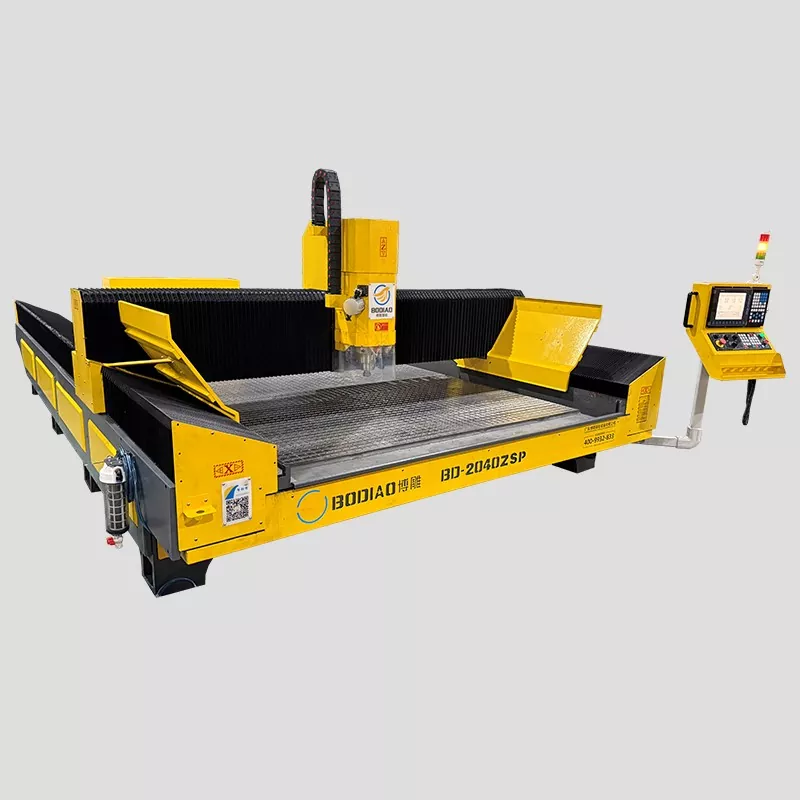
What Practical Problems Do Buyers Expect an Engraving Machine to Solve?
From my experience working with fabricators and custom manufacturers, most buyers are not searching for abstract innovation. They want solutions to very concrete problems that slow their workflow or increase operational costs. A well-designed Engraving Machine usually addresses several of these concerns at once.
- Reducing manual marking errors that lead to material waste
- Improving consistency across batch production
- Supporting multiple materials without constant recalibration
- Shortening training time for new operators
These points matter because engraving accuracy is often tied directly to downstream processes such as assembly, branding, or quality inspection.
How Does an Engraving Machine Influence Daily Production Efficiency?
In daily operations, I have seen that efficiency is rarely about peak speed alone. It is about predictable performance over long working hours. A stable Engraving Machine helps teams plan production schedules with fewer interruptions caused by alignment issues or inconsistent depth control.
| Operational Aspect | Impact on Workflow |
|---|---|
| Motion control stability | Ensures uniform engraving depth across repeated jobs |
| Material adaptability | Allows switching between metals, plastics, and wood with minimal setup |
| Control system usability | Reduces operator errors and shortens learning curves |
These factors are often overlooked during early purchasing decisions, yet they shape long-term operational costs more than headline specifications.
Why Do Many Workshops Prioritize Precision Over Maximum Speed?
Speed looks attractive on paper, but in real production environments, precision protects margins. I have learned that an Engraving Machine delivering consistent detail at a controlled pace often outperforms faster systems that require frequent rework. Precision also matters when engraving fine logos, serial numbers, or technical markings that must meet regulatory standards.
By focusing on accuracy first, manufacturers gain confidence that every engraved component meets expectations without extra inspection steps.
How Can an Engraving Machine Support Long-Term Business Growth?
Growth is rarely about replacing equipment every year. It is about choosing machines that scale with changing order volumes and customization demands. A flexible Engraving Machine supports this by handling both small custom runs and larger production batches without compromising quality.
- Supports diversified product lines without additional equipment
- Helps maintain consistent branding across different markets
- Reduces outsourcing needs for specialized engraving tasks
This adaptability allows businesses to respond faster to market opportunities while keeping production in-house.
What Should Buyers Look for Before Selecting an Engraving Machine?
Based on industry feedback I have encountered, buyers benefit from looking beyond surface specifications. The right Engraving Machine should align with actual usage conditions, including workload intensity, material variety, and operator skill levels.
Evaluating after-sales support, spare part availability, and system stability often proves just as important as checking engraving speed or spindle power.
Is It Time to Reevaluate Your Current Engraving Setup?
If production bottlenecks, inconsistent engraving quality, or rising labor costs sound familiar, it may be time to reconsider how your engraving process is structured. A carefully selected Engraving Machine can transform engraving from a limiting step into a competitive advantage.
If you are exploring ways to improve precision, efficiency, and long-term reliability, I encourage you to contact us and share your application requirements. A focused discussion can help identify whether an upgraded engraving solution fits your production goals and how it can be integrated smoothly into your workflow.