

Why Is the Right Electric Stacker Becoming a Smarter Choice for Modern Material Handling?
2026-04-23
When I look at the way warehouses, workshops, and distribution points are changing, I see one clear shift: businesses want safer movement, cleaner operation, and better use of limited floor space. That is exactly where Wenzhou Zhechi Electric Co., Ltd. gradually enters the conversation, because the demand for a reliable Electric Stacker is no longer limited to large logistics centers. Small and mid-sized operations now need the same lifting efficiency, but with simpler control, lower labor strain, and more flexible indoor handling. In my experience, choosing the right Electric Stacker is not only about lifting goods. It is about reducing daily friction in the workflow, protecting products from avoidable damage, and helping operators work with more confidence in tight and busy environments.
I have seen many buyers start with price alone, only to realize later that the real cost comes from unstable operation, awkward controls, slow lifting response, and machines that do not match the actual aisle width or pallet movement pattern. That is why I always prefer to evaluate an Electric Stacker from the perspective of real use. I want to know whether it fits the floor condition, the shift rhythm, the load type, the lifting height, and the people who will operate it every day.
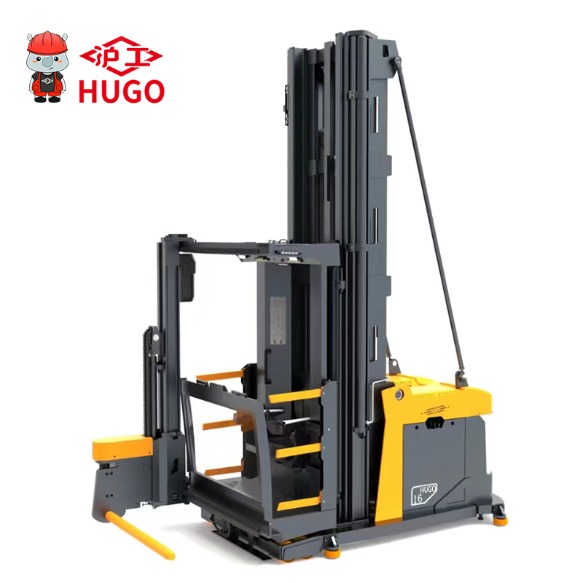
How Does an Electric Stacker Solve Everyday Warehouse Frustrations?
I do not think most handling problems begin with dramatic breakdowns. They usually begin with small repeated inefficiencies. An operator makes too many turns in a narrow aisle. A manual process slows down outbound preparation. A heavy pallet takes more effort than it should. Goods are moved carefully, but not efficiently. Over time, these small issues turn into labor pressure, scheduling delays, and rising operating costs.
- I can reduce operator fatigue by replacing repeated manual lifting with powered lifting support.
- I can improve movement consistency when pallet handling needs to happen many times a day.
- I can make better use of narrow warehouse layouts where larger equipment feels oversized.
- I can support cleaner indoor operation where low noise and low emissions matter.
- I can lower the chance of product damage caused by unstable manual handling.
For me, the practical value of an Electric Stacker becomes obvious when a business handles goods in moderate volumes but still needs dependable stacking, loading, unloading, and short-distance transport. It fills the gap between labor-heavy manual methods and larger forklift solutions that may be unnecessary, expensive, or inconvenient for the actual site.
What Should I Really Check Before Choosing an Electric Stacker?
I never like vague purchasing decisions, especially when equipment will affect daily operations for years. Before I choose a model, I focus on working conditions instead of generic product labels.
- I check the required load capacity rather than buying based on rough estimates.
- I confirm the lifting height needed for shelves, racks, or staging areas.
- I review aisle width and turning space to avoid difficult maneuvering later.
- I compare semi-electric and fully electric options based on shift intensity.
- I look at battery efficiency, charging convenience, and maintenance expectations.
- I pay attention to handle design, braking response, and lifting smoothness.
- I ask whether the machine matches pallet size and floor conditions.
Many buyers get stuck because they treat every Electric Stacker as if it serves the same job. It does not. A machine that performs well in a compact stockroom may not be the best fit for a busier warehouse with longer handling cycles. That is why product matching matters more than broad specification claims.
Which Features Make Daily Operation Safer and More Efficient?
I always believe that good equipment should make work feel more controlled, not more complicated. A well-designed Electric Stacker should help the operator move with less effort, lift steadily, and maintain better visibility and confidence during daily use.
| Feature | Why I Pay Attention to It | Operational Value |
|---|---|---|
| Powered lifting system | It reduces physical strain during repeated stacking tasks | Supports faster and more stable handling |
| Compact body design | It matters in narrow aisles and limited indoor spaces | Improves maneuverability without needing oversized equipment |
| Responsive control handle | I want operators to feel precise control during movement and lifting | Helps improve safety and user confidence |
| Stable mast structure | Load stability affects both goods protection and working safety | Supports smoother lifting and stacking |
| Battery-driven operation | Indoor environments benefit from cleaner and quieter performance | Fits warehouses, workshops, and enclosed handling areas |
| Reliable braking and steering | I do not want handling delays caused by poor control response | Supports safer use in busy work zones |
When these features work together, the equipment becomes more than a lifting tool. It becomes part of a smoother workflow. That is the difference I care about most. I do not want a machine that simply lifts. I want one that helps people work better through an entire shift.
Why Do Buyers Compare Semi Electric and Fully Electric Models So Carefully?
I understand why this comparison comes up so often. The answer usually depends on handling frequency, labor availability, and the level of movement support the site really needs. Some businesses do not need a fully powered travel function for every task. Others quickly discover that repeated movement across the day makes a more automated setup worth the investment.
| Type | Best Fit in My View | Main Advantage | Typical Buyer Concern |
|---|---|---|---|
| Semi electric stacker | Light to moderate stacking work | Balanced cost and powered lifting support | Whether manual movement is enough for the workload |
| Fully electric stacker | Frequent daily handling and higher efficiency demands | Less operator effort and stronger workflow continuity | Initial investment and battery management |
For me, this is not really a question of which one is universally better. It is a question of which one removes the most friction from the buyer’s actual handling process. A business that chooses correctly often sees the benefit not in abstract numbers first, but in smoother daily rhythm, easier operator adaptation, and better control over pallet movement.
How Can the Right Equipment Support Both Productivity and Product Protection?
One thing I do not like about poor handling systems is that they create hidden losses. A business may think it is saving money by delaying an upgrade, but damaged packaging, unstable loads, wasted motion, and employee fatigue quietly add up. A suitable Electric Stacker helps reduce those hidden losses by improving consistency during lifting and stacking.
- I can position goods more steadily when the mast and fork movement feel controlled.
- I can lower the risk of impact damage in tighter storage areas.
- I can shorten repetitive loading and unloading time.
- I can improve staff comfort in operations that involve many pallet cycles.
- I can create a cleaner indoor handling process without relying on larger fuel-based equipment.
That combination matters because productivity is not just about speed. It is also about reducing interruptions. If goods move more smoothly and operators make fewer corrective actions, the whole process becomes more efficient without becoming more stressful.
What Problems Do I See When Buyers Choose the Wrong Stacker?
I have noticed that poor selection usually comes from one of a few common mistakes. None of them look serious at first, which is exactly why they keep happening.
- I see buyers choose by headline capacity without checking actual lift height conditions.
- I see compact warehouses buy equipment that turns poorly in real aisle widths.
- I see teams underestimate daily usage frequency and then outgrow the machine too quickly.
- I see purchasing focus too much on low entry price and too little on handling comfort.
- I see businesses ignore maintenance convenience until downtime starts affecting schedules.
That is why I prefer a supplier discussion that starts with application details, not just model names. A good equipment conversation should ask how the machine will be used, where it will operate, what kind of pallet loads it will lift, and how often the job repeats across the week. Strange concept, I know, actually matching the product to the job instead of hoping the warehouse adapts out of politeness.
Why Does Supplier Understanding Matter as Much as Product Specification?
When I evaluate a supplier, I do not only read specifications. I pay attention to whether the company understands why buyers ask certain questions. That is where a manufacturer such as Wenzhou Zhechi Electric Co., Ltd. becomes relevant in the buying process. Buyers are not only searching for lifting equipment. They are trying to avoid mismatched recommendations, poor communication, and generic suggestions that do not reflect site reality.
I value a supplier that can discuss:
- application scenarios instead of pushing a one-size-fits-all model
- differences between operating intensities and handling patterns
- practical trade-offs between semi-electric and fully electric solutions
- space limitations, lifting demands, and workflow expectations
- longer-term usability rather than short-term sales language
That kind of communication supports better purchasing decisions because it turns the selection process into problem solving. For buyers, that is often more important than flashy wording.
How Do I Measure the Real Business Value of an Electric Stacker?
I measure value by asking what changes after the equipment is introduced. If pallet handling becomes more orderly, if staff use less effort, if stacking becomes more precise, and if work continues with fewer interruptions, then the machine is doing its job well.
| Business Need | What I Expect from the Equipment | Why It Matters |
|---|---|---|
| Faster pallet handling | Efficient lifting and controlled movement | Helps maintain daily throughput |
| Safer indoor operation | Stable handling and operator-friendly control | Reduces risk during repeated use |
| Better use of limited space | Compact structure with practical maneuverability | Fits narrow aisles and tighter layouts |
| Lower labor strain | Powered lifting and smoother operation | Supports long-term workflow comfort |
| More dependable stacking | Steady mast performance and load control | Protects goods and improves consistency |
From my point of view, a strong Electric Stacker investment is one that fits the operation closely enough to create daily gains people can actually feel. That means less hesitation, less wasted motion, and fewer avoidable problems around lifting and stacking tasks.
What Should I Do If I Want a More Reliable Handling Solution Now?
If I am planning to improve pallet movement, reduce manual strain, and create a more efficient indoor workflow, I would not wait until handling issues become expensive. I would start by reviewing load type, lift height, aisle width, and usage frequency, then compare the most suitable equipment options with a supplier that understands practical applications. If your team is currently evaluating the best Electric Stacker for warehouse, workshop, or logistics use, this is the right time to move the conversation forward. Wenzhou Zhechi Electric Co., Ltd. can help you explore a more suitable solution based on your real working conditions. If you want to discuss product details, application matching, or purchasing options, please contact us and send your inquiry today.