

Why Is Your Cartridge Dust Collector Not Suctioning Properly
2026-10-08
A sudden drop in airflow is one of the most common complaints from facilities running a Cartridge Dust Collector. When your system stops pulling dust away from welding tables, grinding stations, or woodworking machines, production quality and worker safety suffer immediately. At Jiangteng, we have helped hundreds of plants diagnose and fix weak suction issues, and most problems trace back to a handful of predictable causes.
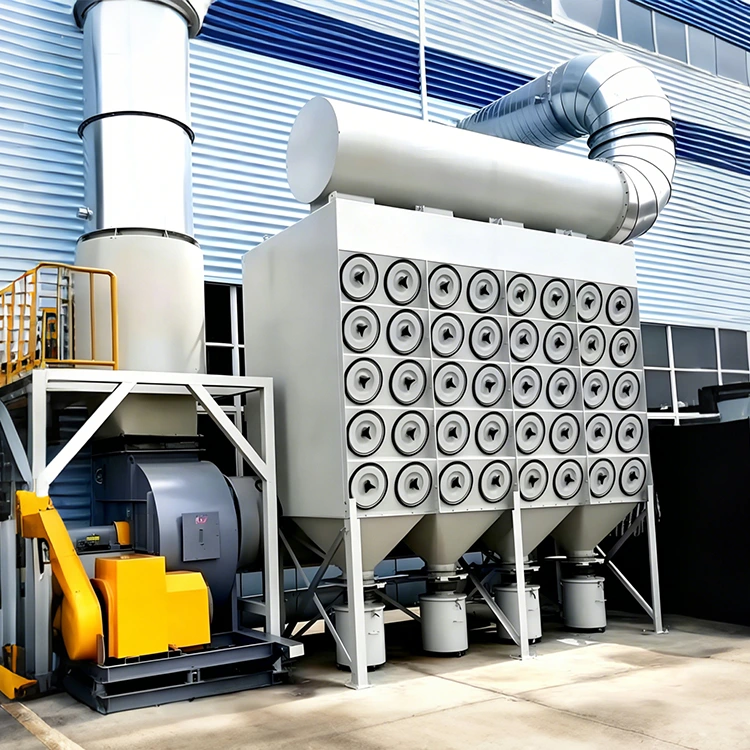
Common Causes of Poor Suction
| Cause | Typical Symptom | Quick Check |
|---|---|---|
| Clogged filter cartridges | Gradual airflow loss, high differential pressure | Read magnehelic gauge |
| Dust build-up in hopper | Reduced suction, dust carryover | Inspect hopper level |
| Leaking gaskets or seals | Fine dust escaping, low vacuum | Smoke test the housing |
| Damaged or worn fan impeller | Weak suction, unusual noise | Inspect impeller blades |
| Blocked ductwork or hoses | Localized loss of suction | Check elbows and branches |
| Incorrect pulse cleaning settings | Short filter life, unstable airflow | Review timer and pressure |
| Undersized unit for the application | Suction never adequate from day one | Compare CFM to demand |
Step-by-Step Troubleshooting Checklist
-
Check the differential pressure gauge. A reading above the recommended range usually means the Cartridge Dust Collector filters are loaded with dust.
-
Inspect the pulse cleaning system. Verify compressed air pressure, solenoid valves, and diaphragm kits are functioning.
-
Examine the hopper and discharge. Dust bridging or a stuck rotary valve can back up airflow.
-
Test for air leaks. Loose clamps, worn door gaskets, and cracked welds allow ambient air to bypass the filters.
-
Review ductwork design. Long runs, sharp elbows, and closed blast gates restrict airflow dramatically.
-
Confirm fan performance. A worn impeller or loose belt reduces static pressure and total suction.
-
Verify filter compatibility. Using the wrong micron rating or pleat design for your dust type causes premature loading.
When to Replace vs. Clean
| Situation | Recommended Action |
|---|---|
| Filters less than 12 months old, light dust | Clean with low-pressure air |
| Filters over 18 months, high pressure drop | Replace with Jiangteng cartridges |
| Torn, collapsed, or moisture-damaged media | Replace immediately |
| Repeated clogging after cleaning | Replace and review pre-cleaning |
Frequently Asked Questions
How do I know if my Cartridge Dust Collector filter is clogged?
A rising differential pressure reading, usually above 4–6 inches of water column, combined with visibly reduced suction at pickup points, indicates the filter media is loaded and needs cleaning or replacement.
Can a Cartridge Dust Collector lose suction because of the fan?
Yes. A worn impeller, loose drive belt, reversed rotation, or undersized motor will reduce static pressure and airflow, making the entire system feel weak even when the filters are clean.
What maintenance schedule keeps a Cartridge Dust Collector working efficiently?
Inspect the differential pressure gauge daily, check pulse valves monthly, empty the hopper weekly, and replace filter cartridges every 12–24 months depending on dust loading and operating hours.
Restoring Peak Performance
Weak suction rarely fixes itself. Start with the gauge, work through the checklist, and replace worn components with quality parts. Jiangteng manufactures durable Cartridge Dust Collector filters and replacement parts engineered for consistent airflow and long service life.
Contact us today for a free airflow assessment, filter sizing consultation, or replacement quote, and let our team help you get your dust collection system back to full suction.