

Will the right Waterproof Membrane Equipment unlock cleaner sheets and faster payback?
2025-12-09
I have spent the last few years walking lines, timing changeovers, and reading the story that every roll core tells. Along the way I kept running into the same question from builders and converters—how do we squeeze more yield without risking failures on the roof or in the tunnel. That is where solutions from Haoyuan started to cross my path, and where I began mapping what modern Waterproof Membrane Equipment must do when the day gets hot, the resin lot changes, and production keeps pushing.
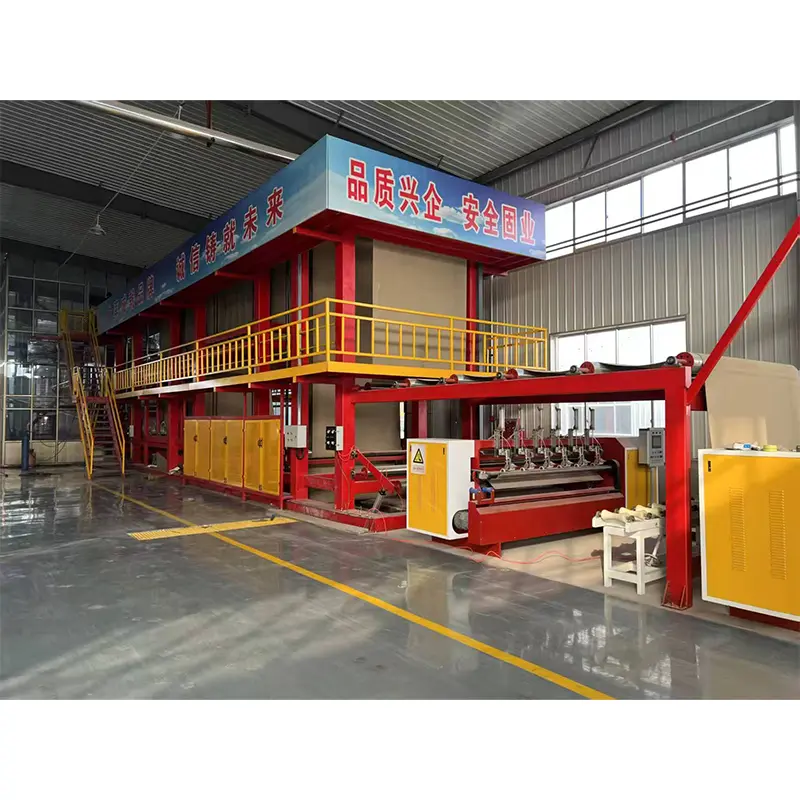
What pain points do I see on membrane lines before we talk upgrades?
- Edge trim creeps wider as tension drifts, turning expensive compound into scrap.
- Thickness swings show up near splice regions, forcing rework or downgrading rolls.
- Emboss depth looks fine at startup then fades as chill roll temperature slides.
- Bitumen fumes or polymer dust trigger compliance headaches and slowdowns.
- Changeovers steal an hour that should have been product on a pallet.
When I audit a shop, I do not just ask about tons per day. I ask how often operators touch settings, how many manual notes sit in the HMI, and what a “good shift” looks like. Those answers guide the spec for new or retrofitted Waterproof Membrane Equipment.
Which configurations of Waterproof Membrane Equipment fit different membrane types?
Instead of listing parts, I map requirements to outcomes—bond strength, dimensional stability, and field installability. The table below summarizes the setups I most often recommend and why.
| Application | Material System | Preferred Line Setup | Typical Width | Throughput Focus | Quality Control Focus | Operator Notes |
|---|---|---|---|---|---|---|
| Single-ply roofing | TPO or PVC | Extrusion with multi-manifold die, inline fabric reinforcement, corona and emboss | 2.0–3.6 m | Stable melt pressure and die-bolt mapping | Closed-loop thickness and chill roll temperature zoning | Quick screen changes and recipe-locked tension profiles |
| APP or SBS sheets | Bitumen-based with polymer modification | Impregnation and lamination, precise bitumen bath, dual unwind and slate granule applicator | 1.0–1.2 m | Heat balance across bath and laminator nip | Mass per unit area control and smoke management | Automatic granule recycling and guided web alignment |
| Self-adhesive membranes | Butyl or hybrid PSA | Coating with release liner, low-tension winding, web cleaners | 1.0–1.5 m | Low shear, low temperature shear-rate control | Coat-weight feedback and liner flatness | Anti-telescoping winding logic and core chuck verification |
How does a modern line reduce scrap without slowing operators down?
- Recipes that actually lock behavior — I insist on recipe objects that carry die-bolt maps, chill zones, tension ramps, and alarm thresholds, not just setpoints.
- Sensor data that works for people — Trend screens must highlight drift with simple traffic-light cues, especially at the winder and laminator nip.
- Changeover choreography — Staging resin, liners, and sleeves saves more time than a faster motor; I script steps on the HMI with check-off prompts.
- Clean maintenance windows — Planned five-minute wipe-downs beat emergency stoppages that cost forty-five.
These practices become easier when the base Waterproof Membrane Equipment is designed for easy access, quick-release guards, and real-world ergonomics.
How do I keep Waterproof Membrane Equipment stable when materials vary?
- Use melt pressure and motor load as early predictors of gauge drift and trigger pre-emptive die-bolt nudges.
- Pair chill roll zoning with ambient compensation so emboss depth holds up through the afternoon heat.
- Control web tension with diameter-aware logic at unwind and winder to avoid core crushing or telescoping.
- Log resin lot, ambient humidity, and operator changes to correlate issues to causes, not hunches.
What should my Waterproof Membrane Equipment ROI model consider in year one?
I never trust ROI that counts only nameplate speed. I include the following levers because they move margins in the real world:
- Scrap rate improvements during the first 90 days of learning.
- Changeover minutes reduced per recipe change and the weekly count of those changes.
- Unplanned stops tied to consumables like screens, knives, and filters.
- Energy per square meter and the effect of heat recovery or better insulation.
- Operator headcount stability after training, not on day one.
Why do I keep pointing buyers to field-tested designs instead of exotic tech?
Because downtime is the tax you pay for novelty. In my experience, the practical advantage of a Haoyuan-style layout is not a flashy feature. It is thoughtful details: cable routing that keeps heat away from drives, guarded nip points that still invite cleaning, and HMIs that speak the language of the shift lead. That is what makes Waterproof Membrane Equipment feel invisible when the plant is at full tilt.
How do I troubleshoot the line when output drifts without guessing?
I carry a simple, repeatable playbook that the crew can run even when I am not there:
- Confirm web path and roller cleanliness before touching setpoints.
- Snapshot melt pressure, chill zones, and winder torque, then adjust one thing at a time.
- Check die-bolt status for frozen actuators and run a short heat-soak if needed.
- Use laser width checks near splice zones to spot tension-related neck-in.
With disciplined logs, the team learns the few patterns that cause most issues and fixes them fast on any Waterproof Membrane Equipment.
Which checklist helps me compare suppliers with clarity?
- Does the vendor share real run data across three consecutive shifts, not a single demo roll
- Can operators reach every clean point without tools in under two minutes
- Are spare parts stocked regionally with guaranteed ship windows
- Is training hands-on with real resin and real faults induced on purpose
- Do software screens surface drift instead of burying it in submenus
Where does sustainability meet cost without greenwashing
- Heat recovery on the bitumen bath and annealing sections that actually drops kWh per square meter.
- Granule and edge-trim reclaim loops tuned to protect surface finish.
- Low-VOC capture that keeps the crew comfortable and the permit clean.
These moves protect both budgets and people, which is why I weigh them when speccing Waterproof Membrane Equipment for long-term growth.
Shall we build your next membrane line together
If you want practical throughput, steadier gauge, and calmer shifts, I am ready to map a line that fits your product and team culture. I can share playbooks, training outlines, and commissioning steps that de-risk startup and get the first pallets out the door with confidence. If you are evaluating Waterproof Membrane Equipment now, tell me your product mix and current bottlenecks and I will translate them into a clear specification and timeline—then we can validate it on the floor. Contact us to request a tailored checklist for Waterproof Membrane Equipment selection and a first-year ROI worksheet. Let us turn the next roll into proof, not a promise.